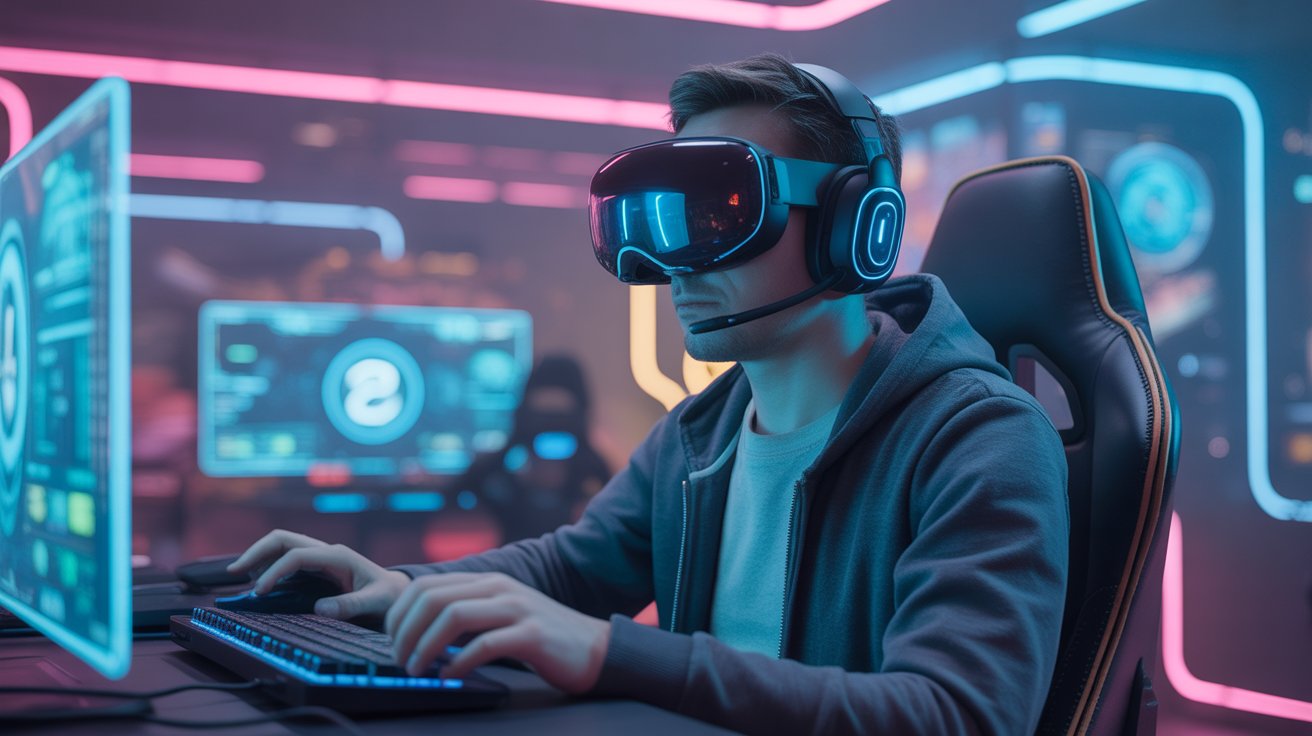
Gaming has evolved rapidly in the past ten years. Players have developed a feeling of smooth execution, real-life graphics, and enhanced interaction. These demands cannot always be achieved by old systems. This trend has brought gamers closer to the next level of enhanced gaming, whereby technology improves the appearance, feeling, and responsiveness of games. Smart engines, more powerful hardware, and optimization are some of the new tools that developers use to create richer worlds. Gamers also experience reduced loading times, enhanced graphics, and more engaging gameplay.
These renovations do not just create beauty. They enhance convenience, faster and control. Gaming in the modern era is more experience-oriented as opposed to being a form of entertainment. With the increased technology, gaming will be more reachable and more potent by the common users. This knowledge about this evolution allows players to choose more appropriate tools and play games to a greater level. This article describes the mechanisms involved in enhanced gaming and the significance of this topic to the future of digital play.
What Is Enhanced Gaming?
Enhanced gaming is the application of advanced technology in order to make games perform better and experience them better by the players. It is a combination of a potent hardware, intelligent software, and streamlined systems to produce a much smoother, quicker, and more realistic game play. The goal is simple. Bring games to life and feel more alive. Players must view improved graphics, reduce the delay, and have enhanced access to the game world.
Enhanced gaming of the modern type is concerned with both performance and immersion. Systems are created to respond to player behavior by the developers. The graphics engines display real-time scenes. AI upgrades the character responses. The cloud services decrease the hardware boundaries. The combination of these features will produce a smooth experience that is not possible with traditional gaming systems.
Definition and Core Concept
Fundamentally, improved gaming implies improvement of all layers of the gaming ecosystem. It encompasses graphics endowment, processing speed, audio design and network performance. Both additions eliminate tension between the player and the game. Increased frame rates cause less motion blur. Shrewd performance clarifies description. Adaptive controls simplify the gameplay.
It is not just a matter of visual enhancements. It deals with smart systems which are responsive in real time. Games load faster. Controls feel precise. Worlds react dynamically. Players are more attached to the environment. It is this relation which characterizes the improved experience.
How It Differs from Traditional Gaming
In traditional gaming, there were hardware restrictions. Old systems struggled with expansive open worlds and overly complicated mechanics. Load screens interrupted gameplay. Frame drops affected controls. Improved gaming minimizes these issues, making games smarter and more powerful.
New systems incorporate such technologies as real-time ray tracing and AI-assisted rendering. These effects form the natural light and textures. The non-player characters are smarter in nature. The environments vary depending on the actions by the players. The outcome is less artificial and more natural.
The gaming is also enhanced and it supports cross-platform gaming and cloud-based gaming. The players do not rely on one device anymore. They do not have to spend time in between systems. This flexibility is a significant departure with the conventional models of gaming.
This difference will make players realize why better gaming is not a mere enhancement. It is a change in the working of digital worlds and how individuals relate with them.

Key Technologies Powering Enhanced Gaming
It is based on various latest technologies that complement each other and ensure improved performance and realism. These tools are aimed at speed, visual, and smart processing. They enable games to run well as well as developing bigger environments. Both technologies eliminate technical boundaries which limited gameplay in the past.
Real-Time Ray Tracing and Graphics Engines
Real time ray tracing is a better way of showing the behavior of light within a game. It reproduces the effects of natural lights, reflections, and shadows. Surfaces behave to light like it would in the real world. This renders the environments more real and detailed.
Modern graphics engines also support high-resolution textures and dynamic rendering. They adjust the visual quality based on the system’s performance. This balance makes games not to be clumsy and does not lose clarity. Players get access to cinematic visuals without a lot of lag.
Artificial Intelligence in Gameplay
Artificial intelligence enhances the way the game worlds react to people. NPCs behave more naturally. Enemies adapt to strategy. Characters respond to the environment rather than operate on set scripts.
AI does the performance optimization as well. Resource needs are projected by systems and dynamically change processing power. This lessens the stuttering and enhances stability of frames. What it can do is make the gameplay easier and more intelligent interactions.
Cloud Gaming and Streaming Platforms
Cloud gaming eliminates the use of costly hardware. Games are played remotely and transmitted to remote devices. Low-end systems allow players to obtain high end titles. This increases access and reduces the barrier to entry.
The instant updates and faster deployment are also possible through the streaming platforms. The game developers are able to enhance games without making them heavy downloads. Players have the benefit of playing on constant performance.
Low-Latency and High Refresh Rate Systems
Modern gaming is very sensitive to low latency. Accuracy of control is enhanced by fast response time. Players who play competitively enjoy immediate response between action and input.
The displays with a high refresh rate are smoother in motion. They sharpen the vision and make things clearer. These systems coupled with a streamlined hardware produce flowing gameplay. All of these movements are accurate and reactive.
These are the technologies that make up the improved gaming. The two collaborate in order to provide speed, realism and immersion. Learning them makes the players value how the gaming is enhanced by modern systems.

Benefits of Enhanced Gaming for Players
Enhanced gaming is player centric. Any upgrade should serve to streamline, make the gameplay more engaging and accessible. These enhancements are not limited to professional gamers only. The daily players are enjoying faster systems and intelligent design. The outcome is a better and fun gaming experience.
Improved Immersion
Contemporary gaming technology immerses players into the virtual worlds. The environment is made alive with high-quality graphics, spatial sound and realistic animation. The VR and AR systems become an additional layer of presence. Players do not feel as if they are watching, but rather they are part of the action.
Responsiveness also brings about immersion. Players are interested when the controls respond immediately. No time elapses to distract attention. This brings about a better attachment to the game.
Performance and Speed
The improved gaming systems minimize lag and protracted loading periods. Quickened processors and tuned engines maintain the frame rates. Seamless play reduces frustration and enables longer gaming sessions.
Fast loading speeds let players transition between scenes without interruptions. This keeps the pace steady. There is also a decrease in crashes and performance decreases as a result of a stable system.
Accessibility and Cross-Platform Gaming
The present-day platforms enable gamers to use multiple devices without any gameplay loss. Games are accessible through cloud save as well as streaming services across different systems. One has the ability to begin on a game console and keep playing on a mobile phone.
This availability significantly widens the gaming fraternity. For example, individuals do not have to spend a lot of money on installations in order to enjoy more sophisticated titles. Moreover, improved gaming eliminates hardware barriers and opens the ecosystem to additional players. Consequently, a larger and more diverse audience can engage with modern games.
Competitive Edge in Esports
Competitive gaming requires precision and accuracy. In particular, improved systems have enhanced frame rates and reduced latency. As a result, these elements significantly improve control while boosting reaction time. Consequently, players can perform more effectively and respond faster during gameplay.
Players who are professional are dependent on consistent performance. Any minor delays may have an impact. Increased gaming technology helps in creating equal and healthy competition. It puts in a place where competence is more important than the constraints of hardware.
All these advantages indicate why improved gaming is significant to both the normal users and the professionals. It enhances convenience, ease of access, and general pleasure. These advantages keep on increasing with the advancement in technology.
Enhanced Gaming Hardware Innovations
The importance of hardware in improved gaming is significant. Powerful elements permit software to operate optimally. The contemporary systems are concerned with speed, efficiency as well as intelligent design. Such upgrades help to play the game easier and with more graphics without any overheating or slowing.
Next-Gen GPUs and CPUs
There are new graphics cards and processors with enormous performance increases. GPUs are able to contend with sophisticated graphics such as ray tracing and high-resolution textures. CPUs handle CPU logic and background tasks. They maintain the frame rates together and responsively.
Manufacturers currently make chips with gaming optimization in consideration. The increased clock speed and efficiency in cooling systems avoid performance degradation. Players are always enjoying power during extended games.
Smart Gaming Peripherals
Headsets, controllers and key boards have also developed. Haptic feedback and adaptive triggers are found on many devices today. These capabilities bring physical feeling to the play. Resistance, vibration and movement can be felt by the players.
Accuracy of control is enhanced by the use of high-precision gaming mice and mechanical keyboards. The spatial audio headsets assist the players to sense the direction and distance in-game. This is because these tools provide a more informed and responsive user.
High-Speed Internet and 5G Gaming
Modern gaming requires the presence of a good internet connection. Fast Internet eliminates lag and enhances online stability. Multiplayer games run more smoothly when players keep latency to a minimum.
The 5G networks go one step further. Mobile gaming has the advantage of having a quicker data transmission and less latency. The competitors are able to stream games and play online without much break.
The basis of the increased gaming is realized through these hardware inventions. The smartness of components, powerful components and high-speed connectivity combine to form a smooth experience. With the advancements in hardware, the difference between virtual and actual interaction continues to decrease.
Role of AI and Cloud in Modern Gaming
The future of improved gaming is defined by artificial intelligence and cloud computing. They enable smarter and faster running of games and reach more players. These systems have the burden of processing tasks in the background, but the game processes run smoothly on the screen. AI enhances individualisation. Games change the level in accordance with the skill of a player. The matchmaking systems will match the users with even opponents. Intelligent analytics monitor actions and process optimization. This makes them equalized experiences and not generic.
Cloud infrastructure increases access. Servers distribute the workload instead of relying on local hardware. Big game worlds load more quickly as remote systems perform complicated actions. Updates install automatically without long delays. According to the players the barriers are fewer. Live services are also supported by AI and cloud. The developers keep real-time checks on the performance and correct problems fast. Dynamic servers increase the number of servers when the traffic is high enough to avoid crashes. This credibility creates good faith and maintains societies in motion.
Artificial intelligence and cloud computing are transforming how games run. They transform gaming into a device based model to an ecosystem model. Gamers no longer need to rely on individual equipment. A fast, stable, and intelligently configured network connects them. This change will be a big leap towards improved gaming.

Enhanced Gaming and Immersive Experiences
The contemporary gaming objective primarily involves immersion. Nowadays, technology is designed to blur the line between the player and the environment. Consequently, enhanced gaming goes beyond the visual and transforms into a fully sensory experience. Indeed, players are increasingly drawn into the game world in ways that were previously impossible.
Virtual Reality (VR)
Virtual reality immerses players directly into the game world. Through headsets, movement is monitored and the point of view is adjusted accordingly. As a result, this creates a sense of presence that flat screens fail to depict. Furthermore, VR systems now offer smoother tracking and higher resolution. In addition, reduced motion delay helps avoid discomfort, so players can navigate the virtual realm in a truly realistic way.
Augmented Reality (AR)
Augmented reality is a combination of the digital and real world. Specifically, games superimpose graphics onto the real world through cameras and sensors. As a result, this brings about interactive experiences that go beyond the screen. Moreover, AR games promote physical activity and fieldwork. Consequently, they transform normal spaces into dynamic gaming environments.
Spatial Audio and Haptic Feedback
Immersive technologies make gaming a truly multi-sensory experience. As a result, players are not just watching the game, but also feel fully present inside it. Indeed, this emotional bond represents one of the greatest advantages of enhanced gaming. Consequently, games become more engaging and memorable for every player.
The immersive technologies make gaming a multi-sensory experience. As a result, players are not only watching the game, but they also feel present inside it. Indeed, such an emotional bond is one of the greatest advantages of improved gaming. Consequently, games become more engaging and memorable for players.
Challenges and Limitations
Enhanced gaming offers many benefits, but there are real challenges that players must consider. High-end hardware like GPUs, processors, and peripherals can be expensive, creating a gap between elite and basic setups. Online and cloud gaming also rely on fast, stable internet, which can be a problem in areas with weak infrastructure. Compatibility issues may require upgrading devices or software, making it harder for casual users to access all features.
Data privacy is another concern, as usage data can enhance gameplay but requires strong security and transparency from developers. Despite these challenges, the advantages of enhanced gaming remain significant. As technology evolves, prices drop, infrastructure improves, and the industry continues to develop more immersive, accessible, and secure experiences for players.
Future of Enhanced Gaming
The future of improved gaming is moving toward greater immersion and intelligence. Indeed, developers are already researching ways to create dynamic worlds with the help of AI. As a result, these environments can change in real time depending on players’ actions. Consequently, gameplay becomes more adaptive, engaging, and personalized.
Cloud-native games are very likely to grow. They will not be operating on a central unit; rather, they will be completely distributed on the servers. The technique eliminates hardware constraints and accommodates huge shared worlds.
The immersive technology will expand. The progress of VR and AR can result in the lightweight of headsets and real-life contact. Haptic systems would be able to simulate touch more accurately. Other scientists go as far as to examine brain-computer interfaces, which react to the neural responses.
The second level of gaming is concerned with presence and customization. The systems will change and conform immediately to the behavior of the players. Worlds will become dynamic and alive. Further gaming will not only ameliorate graphics. It will transform the relationship of man with the digital environments.
Conclusion
Higher gaming is one of the significant changes in digital entertainment. It integrates both robust hardware and smart software that would produce smoother and more engaging experiences with the help of cloud infrastructure. It can be enjoyed by players due to increased performance, higher visual experience, and increased access.
Although the issues still exist, the progress is stable. Costs gradually fall. Connectivity improves. Technology is more effective and accommodating. These tendencies indicate that improved gaming will not be a fad addition. It forms the basis of the next generation game ecosystem.
The knowledge of such developments helps players make better decisions and realize the extent to which gaming has progressed. However, better graphics are not all that enhanced gaming is. In fact, it concerns the redefinition of how people interact with virtual worlds, while also fostering the creation of the future generation of play. Consequently, gaming continues to evolve into more immersive and meaningful experiences.
Frequently Asked Questions
Q: So, what is meant by enhanced gaming?
Enhanced gaming is the current-day modification that boosts performance, graphics, responsiveness, and immersion. Specifically, it incorporates the latest hardware, AI, and streamlined software so that it produces more realistic and smooth gameplay. As a result, players experience a more engaging and lifelike gaming environment.
Q: Would expensive hardware be required to play upgraded games?
Not always. While expensive computing enhances performance, on the other hand, cloud-based computing enables players to play titles with high requirements even if they don’t have powerful personal computers. However, the connection to the internet should be stable, which may therefore minimize the necessity of expensive upgrades. Consequently, more players can enjoy high-quality gaming without heavy investments.
Q: What is the level of AI enhancement to gaming?
Games are more intelligent and adaptable with AIs. In particular, it enhances the behavior of NPCs, while balancing difficulty and optimizing performance in real time. As a result, this produces a responsive and personalized gameplay experience. Moreover, players feel more engaged and challenged.
Q: Can only competitive players benefit in improved gaming?
No. In fact, hardcore players are just as beneficial as casual gamers. With faster loading, smoother graphics, and greater controls, games not only create greater comfort but also enhance amusement for all. Consequently, everyone can enjoy a more satisfying experience.
Q: Is better gaming a prerequisite to continuous internet connectivity?
Some features do. For instance, online gameplay and cloud gaming require a high level of connectivity. Nevertheless, a lot of improved systems continue to allow offline play while offering improved local performance. Moreover, these advancements ensure smoother experiences, and players can enjoy games even without constant internet access.
Q: What will become of enhanced gaming?
There are AI-generated worlds, moreover, cloud-native games, and additionally, more immersive technology in the future. Furthermore, systems will also push hardware restrictions while adding more realism, accessibility, and personalization. Consequently, players can expect a richer gaming experience.