The Future of Intelligent Technology in 2026
Introduction:
The Future of Intelligent Technology in 2026. Technology has always played an important role in human civilization, but in recent years the speed of innovation has become faster than ever before. The year 2026 represents a major turning point in the world of intelligent technology. Artificial Intelligence, automation, robotics, machine learning, cloud computing, and smart devices are transforming industries and changing everyday human life. What once seemed impossible is now becoming reality as intelligent systems continue to evolve and improve.
The future of intelligent technology in 2026 is not just about advanced machines or powerful computers. It is about creating a smarter world where technology understands human behavior, predicts needs, automates tasks, and improves efficiency in every area of life. Businesses, healthcare systems, educational institutions, transportation networks, and even homes are becoming more intelligent because of AI-powered innovations.
In modern society, intelligent technology is helping people save time, improve communication, increase productivity, and access information instantly. Smart devices can now learn user preferences, respond to voice commands, analyze massive amounts of data, and perform tasks with little or no human involvement. As technology continues to evolve, intelligent systems are becoming more connected, personalized, and powerful.
The rapid growth of intelligent technology is also creating new opportunities for businesses and individuals. Companies are investing billions of dollars in AI research and development because intelligent systems can reduce costs, improve decision-making, and increase profits. At the same time, ordinary people are benefiting from smarter gadgets, faster communication, better healthcare, and improved digital experiences.
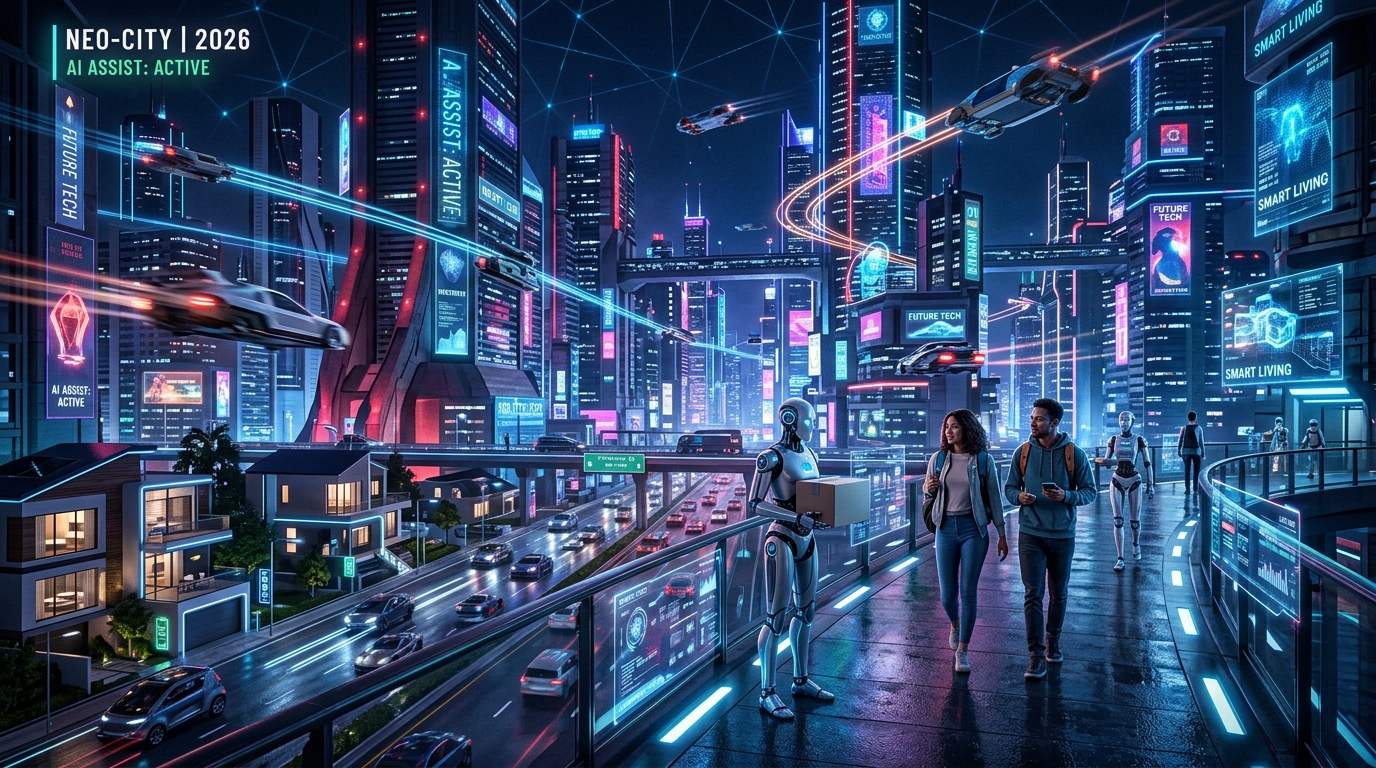
The future of intelligent technology in 2026 is expected to reshape society in ways that were once only imagined in science fiction movies. From AI assistants and smart cities to robotic automation and virtual reality, intelligent systems are becoming central to the modern world.
The Rise of Artificial Intelligence
Artificial Intelligence is one of the biggest driving forces behind intelligent technology in 2026. AI refers to computer systems that can perform tasks normally requiring human intelligence. These tasks include learning, reasoning, speech recognition, decision-making, and problem-solving.
AI technology has improved rapidly over the last few years because of better algorithms, stronger computing power, and massive data availability. Modern AI systems can understand human language, create realistic images and videos, analyze complex information, and even generate creative content.
Businesses are using AI to automate operations, improve customer service, and increase efficiency. AI chatbots are helping companies communicate with customers instantly, while intelligent analytics systems are helping organizations make smarter business decisions.
In healthcare, AI is assisting doctors in diagnosing diseases, analyzing medical reports, and monitoring patient health. AI-powered systems can detect patterns in medical data much faster than humans, improving treatment accuracy and saving lives.
AI is also transforming education. Intelligent learning platforms can personalize lessons based on student performance, helping learners understand subjects more effectively. Students can access AI tutors, language translation systems, and interactive educational experiences from anywhere in the world.
One of the most important trends in 2026 is Generative AI. These systems can create text, images, videos, music, and animations automatically. Content creators, marketers, filmmakers, and businesses are increasingly using AI-generated content to save time and reduce production costs.
As AI becomes more advanced, experts believe it will continue to transform industries and redefine the relationship between humans and technology.
Smart AI Gadgets and Connected Devices
The future of intelligent technology is closely connected with the growth of smart AI gadgets. In 2026, millions of people are using AI-powered devices every day. Smartwatches, AI speakers, virtual assistants, smart home systems, and wearable technology are becoming essential parts of daily life.
Smart gadgets use machine learning and sensors to understand user behavior and provide personalized experiences. These devices can monitor health, control home appliances, provide entertainment, and improve communication.
AI smartwatches are now capable of tracking heart rate, sleep patterns, stress levels, blood oxygen, and physical activity. Some advanced devices can even predict health problems before they become serious.
AI-powered home assistants can control lights, air conditioners, televisions, and security systems through simple voice commands. These systems help create fully automated smart homes where devices communicate with each other intelligently.
Smart security systems are also becoming more advanced. AI cameras can recognize faces, detect suspicious activity, and send alerts instantly. Businesses and homeowners are increasingly relying on intelligent security systems for safety and surveillance.
Wearable AI technology is another growing trend. Smart glasses, intelligent earbuds, and AI-powered clothing are becoming more common in the consumer market. These devices combine convenience, entertainment, and advanced digital interaction.
The growth of smart gadgets is making human life more efficient, connected, and comfortable than ever before.
Intelligent Technology in Healthcare
Healthcare is one of the industries most heavily impacted by intelligent technology in 2026. AI systems are helping doctors, hospitals, and medical researchers improve healthcare services and patient outcomes.
AI-powered diagnostic tools can analyze medical scans, detect diseases, and identify health risks with impressive accuracy. These systems help doctors make faster and more informed decisions.
Wearable health devices allow people to monitor their physical condition in real time. Smart health gadgets can track blood pressure, heart activity, sleep quality, and fitness levels. This data helps users maintain healthier lifestyles and seek medical help when necessary.
Telemedicine is also becoming more advanced because of intelligent technology. Patients can consult doctors remotely using AI-powered healthcare platforms. This is especially useful for people living in remote areas where medical services are limited.
Robotic surgery systems are another important innovation. Intelligent surgical robots can assist doctors in performing precise operations with reduced risks and faster recovery times.
AI is also accelerating medical research. Researchers use machine learning systems to analyze massive amounts of medical data, helping identify new treatments and medications faster than traditional methods.
The future of healthcare technology in 2026 is focused on personalized treatment, preventive care, and improved patient experiences.
Smart Cities and Intelligent Infrastructure
The concept of smart cities is becoming increasingly important in 2026. Governments around the world are investing in intelligent infrastructure to improve urban living conditions and manage resources more efficiently.
Smart cities use AI, sensors, cloud computing, and connected devices to monitor and manage transportation, energy systems, public safety, and communication networks.
Intelligent traffic systems can reduce congestion by analyzing traffic patterns and automatically adjusting traffic signals. This helps save time, reduce fuel consumption, and decrease pollution.
Smart energy systems optimize electricity usage and improve efficiency. AI-powered grids can monitor energy demand and distribute power more effectively.
Public safety is also improving through intelligent surveillance systems. AI cameras and monitoring technologies help authorities detect unusual activity and respond quickly to emergencies.
Waste management systems in smart cities use sensors and automation to improve garbage collection and recycling processes. This helps reduce environmental pollution and improve city cleanliness.
The development of smart cities represents a major step toward more sustainable and efficient urban environments.
Automation and Robotics
Automation is becoming one of the defining features of intelligent technology in 2026. Businesses and industries are increasingly using robots and AI systems to perform repetitive and complex tasks.
Factories are using robotic automation for manufacturing, packaging, and quality control. These intelligent machines work faster and more accurately than humans in many situations.
Warehouse automation is also growing rapidly. Companies use AI-powered robots to organize inventory, manage logistics, and process deliveries efficiently.
The transportation industry is experimenting with self-driving vehicles and autonomous delivery systems. AI technology allows vehicles to analyze surroundings, detect obstacles, and navigate roads with minimal human involvement.
Restaurants and retail businesses are also adopting automation. Some stores use AI-powered checkout systems, robotic assistants, and intelligent inventory management tools.
While automation improves productivity and reduces operational costs, it also raises concerns about employment. Some traditional jobs may disappear because machines can perform certain tasks more efficiently.
However, experts believe intelligent technology will also create new career opportunities in AI development, robotics engineering, cybersecurity, and digital management.
Intelligent Technology in Education
Education is changing rapidly because of intelligent technology. In 2026, students and teachers are benefiting from AI-powered learning systems, virtual classrooms, and digital educational tools.
AI learning platforms can analyze student performance and create personalized study plans. These systems help students learn at their own pace and improve understanding of difficult subjects.
Virtual classrooms and online education platforms are becoming more advanced. Students can attend classes from anywhere in the world using intelligent communication systems.
Language learning has improved significantly because of AI translation tools and speech recognition technology. Students can practice speaking and receive instant feedback.
Educational AI assistants can answer questions, explain concepts, and help students complete assignments more efficiently.
Virtual reality and augmented reality are also becoming popular in education. These technologies create immersive learning experiences that make education more interactive and engaging.
The future of education in 2026 is focused on accessibility, personalization, and digital innovation.
Entertainment and Media Technology
The entertainment industry is experiencing massive transformation because of intelligent technology. AI-powered systems are changing how people consume media, play games, and create content.
Streaming platforms use intelligent algorithms to recommend movies, music, and videos based on user preferences. These recommendations improve user experiences and increase engagement.
AI-generated content is becoming more common in filmmaking, music production, and digital art. AI systems can create realistic animations, edit videos automatically, and even compose music.
Virtual reality and augmented reality technologies are creating immersive entertainment experiences. Users can explore virtual worlds, play advanced games, and interact with digital environments in realistic ways.
Gaming technology is also becoming more intelligent. AI systems improve graphics, create realistic non-player characters, and personalize gameplay experiences.
Social media platforms are heavily influenced by intelligent technology as well. AI algorithms analyze user behavior, recommend content, and improve online advertising systems.
The future of entertainment in 2026 is becoming more personalized, interactive, and digitally connected.
Cybersecurity and Data Protection
As intelligent technology becomes more advanced, cybersecurity is becoming increasingly important. AI systems and connected devices collect massive amounts of personal and business data, making digital security a major concern.
Cybercriminals are using advanced techniques to target networks, steal information, and disrupt systems. To fight these threats, companies are investing heavily in AI-powered cybersecurity solutions.
Intelligent security systems can detect unusual behavior, identify threats, and respond to cyberattacks faster than traditional security methods.
Biometric security technologies such as facial recognition, fingerprint scanning, and voice authentication are becoming more common in smartphones, banking systems, and digital platforms.
Governments and businesses are also developing stronger data protection regulations to protect user privacy and prevent misuse of personal information.
The future of intelligent technology depends heavily on creating secure and trustworthy digital systems.
Environmental Impact of Intelligent Technology
Intelligent technology is also helping address environmental challenges. AI systems are improving energy efficiency, reducing waste, and supporting sustainable development.
Smart energy systems monitor electricity usage and help reduce unnecessary consumption. Intelligent thermostats and lighting systems automatically adjust settings to save energy.
AI-powered environmental monitoring systems track air quality, weather patterns, and pollution levels. Governments and researchers use this data to improve environmental policies.
Agriculture is benefiting from intelligent technology through smart farming systems. Farmers use AI sensors, drones, and automated irrigation systems to increase crop production and reduce water waste.
Electric vehicles and renewable energy technologies are becoming more advanced because of intelligent systems.
Technology companies are increasingly focusing on sustainability and environmentally friendly innovation.
Human Interaction with Intelligent Technology
Human interaction with technology is evolving rapidly in 2026. AI systems are becoming more capable of understanding human emotions, speech patterns, and behavior.
Virtual assistants can now hold more natural conversations and provide personalized responses. Some AI systems can recognize emotional tones in speech and adjust communication accordingly.
Brain-computer interfaces are another emerging technology. Researchers are exploring systems that allow humans to control devices directly through brain signals.
The relationship between humans and intelligent technology is becoming more integrated and interactive.
Challenges and Ethical Concerns
Despite the many benefits of intelligent technology, several challenges and ethical concerns remain important in 2026.
Privacy is one of the biggest concerns. AI systems collect large amounts of personal data, raising questions about surveillance and data misuse.
Bias in AI systems is another issue. Some algorithms may produce unfair results because of biased training data.
Job automation also creates economic concerns. Some industries may experience job losses as machines replace human workers.
There are also fears about the misuse of AI for cybercrime, misinformation, and deepfake technology.
Experts believe governments, businesses, and researchers must work together to create ethical guidelines and regulations for responsible AI development.
The Future Beyond 2026
The future of intelligent technology extends far beyond 2026. Experts predict even greater advancements in AI, robotics, biotechnology, and digital communication over the coming decades.
Future technologies may include fully autonomous transportation systems, advanced humanoid robots, intelligent medical implants, and highly realistic virtual environments.
Artificial General Intelligence, often called AGI, is another area of interest. AGI refers to AI systems capable of performing any intellectual task that humans can do. While still under development, AGI could dramatically change society in the future.
Space exploration may also benefit from intelligent technology. AI systems could help astronauts, manage spacecraft, and support future missions to Mars and beyond.
The next generation of intelligent technology may transform human civilization in ways that are difficult to imagine today.
Conclusion
The future of intelligent technology in 2026 represents one of the most exciting periods in human history. Artificial Intelligence, automation, robotics, smart devices, and connected systems are transforming industries and reshaping everyday life.
Intelligent technology is improving healthcare, education, communication, transportation, entertainment, and business operations. Smart AI gadgets, automated systems, and advanced digital networks are making life more efficient, personalized, and connected.
At the same time, challenges such as cybersecurity, privacy protection, ethical concerns, and job automation require careful management and responsible innovation.
The world is entering a new technological era where intelligent systems are becoming deeply integrated into society. As AI and smart technologies continue to evolve, humanity may experience even greater advancements in the years ahead.