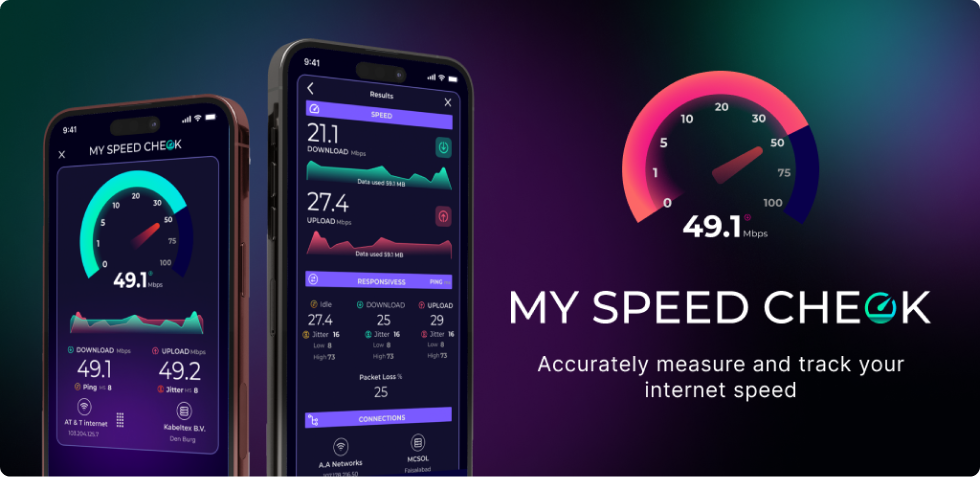
What Is Internet Speed Test in 7G? Complete Guide
Introduction
What Is Internet Speed Test in 7G? has become one of the most important technologies in modern life. From communication and education to business and entertainment, everything depends on a stable and fast internet connection. As technology continues to evolve, mobile networks have progressed from 1G to 5G, and researchers are already discussing the possibilities of 6G and even 7G. With these advancements, internet speed testing has become more important than ever.
Many people are curious about the term “7G Internet Speed Test.” They want to know what it means, how fast a 7G network could be, and how internet speed tests might work in the future. This article explains everything you need to know about internet speed tests and the concept of 7G technology.
Understanding Internet Speed Tests
An internet speed test is a tool used to measure the performance of an internet connection. It helps users determine how fast data can be downloaded, uploaded, and transferred between devices and servers.
Speed tests typically measure three important factors:
Download Speed
Download speed refers to how quickly data can be received from the internet. This includes downloading files, watching videos, browsing websites, and streaming content.
Upload Speed
Upload speed measures how quickly data can be sent from your device to the internet. Activities such as uploading videos, sending emails with attachments, and participating in video conferences depend on upload speed.
Ping or Latency
Latency measures the time it takes for data to travel from your device to a server and back. Lower latency results in faster response times and smoother online gaming, video calls, and real-time applications.
Evolution of Mobile Networks
1G Technology
The first generation of mobile networks appeared in the 1980s. It supported only voice communication and offered limited quality and security.
2G Technology
2G introduced digital communication, text messaging, and improved voice quality. It was a major step forward from analog systems.
3G Technology
3G enabled mobile internet access, allowing users to browse websites, send emails, and use basic online applications.
4G Technology
4G revolutionized mobile connectivity by providing high-speed internet suitable for HD video streaming, online gaming, and video conferencing.
5G Technology
5G brought significantly faster speeds, lower latency, and support for billions of connected devices. It enables advanced technologies such as smart cities, autonomous vehicles, and the Internet of Things (IoT).
6G Technology
Although still under development, 6G is expected to provide speeds up to 100 times faster than 5G and support immersive virtual and augmented reality experiences.
7G Technology
Currently, 7G technology does not officially exist. Researchers and technology experts use the term to discuss future possibilities beyond 6G. It remains a theoretical concept rather than a commercially available network.
What Is 7G Internet?
7G Internet refers to a hypothetical future generation of wireless communication technology that may emerge decades from now. While there are no official standards, many experts believe 7G could transform global connectivity through advanced satellite systems, artificial intelligence, and quantum communication technologies.
Potential features of 7G may include:
- Extremely high data transfer speeds
- Near-zero latency
- Global internet coverage
- AI-powered network management
- Quantum communication integration
- Advanced holographic communication
- Fully immersive virtual environments
What Is a 7G Internet Speed Test?
A 7G Internet Speed Test would be a future version of today’s speed testing tools designed to measure the performance of 7G networks.
Such a test could evaluate:
- Ultra-high download speeds
- Ultra-high upload speeds
- Microsecond latency
- Network stability
- AI-driven performance optimization
- Real-time bandwidth allocation
The principles would remain similar to current speed tests, but the scale and precision would be far more advanced.
Expected 7G Internet Speeds
Since 7G technology is still theoretical, exact speed estimates are unavailable. However, experts speculate that 7G could deliver speeds measured in terabits per second (Tbps).
Possible speed estimates:
- Download Speed: 1–10 Tbps
- Upload Speed: 500 Gbps–5 Tbps
- Latency: Less than 0.1 milliseconds
To understand these speeds:
- A full-length 4K movie could download in less than a second.
- Massive software updates could complete instantly.
- Cloud computing would feel as fast as local computing.
How Internet Speed Tests Work
Speed testing tools follow several steps:
Server Connection
The test connects your device to a nearby server.
Download Measurement
The server sends data packets to your device while measuring transfer speed.
Upload Measurement
Your device sends data back to the server.
Latency Analysis
The test measures the round-trip communication time.
Result Generation
The system calculates and displays the final results.
Future 7G tests may involve AI systems that continuously monitor network conditions and optimize performance in real time.
Benefits of 7G Technology
Instant Communication
Data transfers could become almost instantaneous.
Advanced Virtual Reality
Users may experience fully immersive virtual worlds.
Better Healthcare
Remote surgeries and AI-assisted medical systems could become more reliable.
Smart Cities
Cities could manage transportation, energy, and public services more efficiently.
Enhanced Education
Students worldwide could access advanced virtual classrooms.
Business Innovation
Companies could process massive amounts of data with unprecedented speed.
Challenges of 7G Development
Despite its potential, 7G technology may face several challenges:
Infrastructure Costs
Building global 7G networks would require significant investment.
Security Concerns
More advanced networks may face increasingly sophisticated cyber threats.
Energy Consumption
Managing ultra-fast networks could require innovative energy solutions.
Regulatory Issues
Governments and international organizations would need to develop new standards and regulations.
Popular Internet Speed Test Tools Today
Several speed test platforms are currently available:
- Speedtest by Ookla
- Fast.com
- Google Speed Test
- TestMy.net
- SpeedOf.Me
These tools measure internet performance and help users troubleshoot connectivity issues.
Future of Internet Speed Testing
Future speed tests may include:
- AI-based diagnostics
- Real-time network monitoring
- Satellite connectivity analysis
- Holographic communication testing
- Quantum network performance measurement
As networks become more complex, testing methods will evolve accordingly.
Conclusion
The concept of a 7G Internet Speed Test represents the future of digital connectivity. While 7G technology does not officially exist today, experts envision a world where internet speeds reach terabit-per-second levels, latency becomes nearly zero, and global communication becomes seamless.
Internet speed testing will continue to play a crucial role in measuring network performance and ensuring users receive the best possible experience. Whether through 5G, 6G, or future 7G networks, the goal remains the same: faster, smarter, and more reliable connectivity for everyone.
As technology advances, the dream of instant global communication and limitless digital possibilities may eventually become a reality through the development of 7G networks and beyond.